9-Day Serengeti Wildebeest Migration SafariDay 1 of 9
Tanzania · Tailor-Made Safari
9-Day Serengeti Wildebeest Migration Safari
9 Days / 8 NightsArusha National Park, Tarangire National Park, Serengeti National Park, Ngorongoro CraterPrivate and Tailor-Made
Our longest Tanzanian itinerary, opening with Arusha National Park before working through Tarangire, the central and northern Serengeti and the Ngorongoro Crater. The extra days allow a genuinely unhurried pace…
Our longest Tanzanian itinerary, opening with Arusha National Park before working through Tarangire, the central and northern Serengeti and the Ngorongoro Crater. The extra days allow a genuinely unhurried pace and two nights on the migration in the north.
CountriesTanzania
ParksArusha National Park, Tarangire National Park, Serengeti National Park, Ngorongoro Crater
Duration9 Days / 8 Nights
StylePrivate and Tailor-Made
Best MonthsJul-Oct, Jan-Feb
FromFrom $3,520 per person
What you're likely to see
Large elephant herds
Baobabs
Tree-climbing pythons
Wildebeest migration
Lion
Cheetah
Leopard
Black rhino
Elephant
Dense plains game
Wildlife is wild and nothing is guaranteed, but these are the species this route is built around.
The Route
Where This Trip Takes You
The Detail
What's included, and what isn't
Everything below is set out plainly so there are no surprises when you receive your quotation.
What's Included
All game drives in a private 4x4 safari vehicle with pop-up roof
Services of a professional English-speaking driver-guide
All park and conservation area entrance fees
Accommodation as specified in the itinerary
Meals as specified in the day by day itinerary
Bottled drinking water throughout the safari
Airport transfers on arrival and departure
All government taxes and levies
Not Included
International and domestic flights
Tanzania visa fees
Travel and medical insurance
Tips and gratuities for your driver-guide and lodge staff
Alcoholic and premium beverages
Optional activities including hot air balloon safaris and cultural visits
Laundry, telephone and other personal expenses
Day01of 09
Arusha
Arrival in Arusha
You'll be met at Kilimanjaro International Airport and driven around 45 minutes to Arusha Planet Lodge, set among coffee gardens on the lower slopes below Mount Meru. There is no game drive scheduled today, so the arrival gives you time to settle in, adjust to the altitude of around 1,400 metres, and go over the days ahead with your guide over dinner.
If your flight lands early enough, you can spend the afternoon relaxing by the lodge gardens or taking a short walk with lodge staff to see the coffee plants and local birdlife. Arusha town itself, with its markets and curio shops, is a short drive away if you would rather get out and stretch your legs after the flight.
Day02of 09
Arusha
Arusha National Park
After breakfast you'll drive around 45 minutes to Arusha National Park, entering through Ngongongare Gate onto the lower slopes of Mount Meru. Unlike most parks in northern Tanzania, walking safaris are permitted here, and your guide will take you on a two to three hour walk accompanied by an armed ranger, tracking buffalo, giraffe and warthog on foot through open grassland and acacia woodland.
In the afternoon you'll continue by vehicle to the Momella Lakes, a chain of alkaline lakes that draw flamingos, pelicans and waterbuck to their shores, with Mount Kilimanjaro visible on clear days beyond the crater rim of Meru itself. Black and white colobus monkeys are common in the forest canopy along the park's eastern tracks. You'll return to Arusha Planet Lodge in the late afternoon for dinner.
Day03of 09
Tarangire
Arusha to Tarangire
You'll leave Arusha after breakfast and drive around two and a half hours south west to Tarangire National Park, watching the landscape open out into the dry acacia and baobab country the park is known for. After lunch at Tarangire Safari Lodge, perched on a bluff above the Tarangire River, you'll head out for an afternoon game drive along the riverbanks.
Tarangire holds one of the highest concentrations of elephant in Tanzania, and family herds are often seen digging in the dry riverbed for water even outside the wet season. Look out too for the park's ancient baobabs, some estimated at over a thousand years old, and for lesser kudu and gerenuk moving through the drier bush away from the river. You'll return to the lodge as the light fades for dinner overlooking the valley.
Day04of 09
Serengeti
Tarangire to the Central Serengeti
After an early breakfast you'll set off on the long drive to the Serengeti, climbing first through the Ngorongoro highlands and past Maasai villages and cultivated slopes before descending onto the short grass plains. The drive covers around five to six hours in total, with a stop at Naabi Hill Gate for lunch and to register your entry into Serengeti National Park.
Once inside the park boundary the terrain flattens into the open plains the Serengeti is famous for, and you'll likely see your first Serengeti wildlife, wildebeest, zebra and gazelle scattered across the grassland, on the drive in. You'll arrive at Serengeti Serena in the Seronera area by late afternoon, in time to check in before an early dinner.
Day05of 09
Serengeti
The Seronera Valley
You'll spend a full day exploring the Seronera Valley, the year round heart of the Serengeti ecosystem thanks to its permanent river and dense concentration of resident game. Morning and afternoon game drives take you along the Seronera River and through the scattered granite kopjes that dot the valley, favoured resting spots for lion prides and, at times, leopard draped over the rocks in the shade.
Seronera's mix of riverine woodland and open plain supports one of the highest predator densities in the park, and your guide will work the drainage lines and kopjes methodically through the day, returning to the lodge for a midday break when the heat peaks. Cheetah are regularly seen on the open grass margins, and hippo pools along the river are worth a stop on the return drive.
Day06of 09
Serengeti
North to the Mara River
This morning you'll drive north through the Serengeti, leaving the Seronera Valley behind and crossing into the more open, rolling country toward the Mara River area, a journey of around three to four hours depending on road conditions. The landscape changes noticeably as you head north, with wooded hills and the Grumeti and Bologonya river systems replacing the flat southern plains.
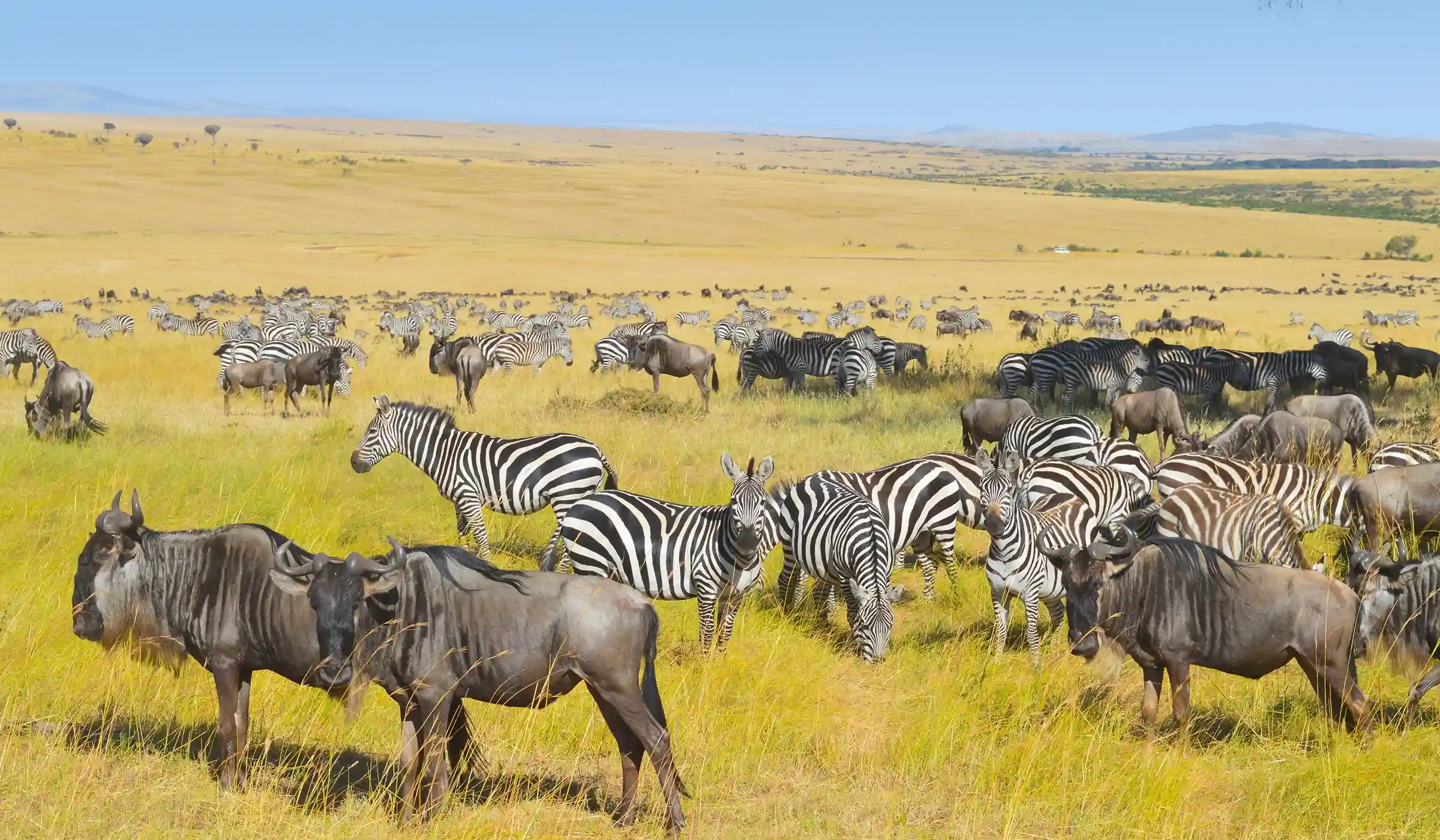
Depending on where the migration herds are moving through at the time of your visit, you may pick up large columns of wildebeest and zebra en route, strung out across the grassland as they push toward the river crossing points. You'll settle into Serengeti Serena for two nights, with an afternoon game drive in the surrounding area once you've checked in, scouting the riverbanks for early signs of herd movement.
Day07of 09
Serengeti
The Crossings
You'll spend the full day in the northern Serengeti around the Mara River, where the wildebeest migration makes its crossings during the northward and southward legs of its annual circuit. Your guide will position the vehicle at known crossing points along the riverbank, watching for the herds to gather and build the nervous energy that precedes a crossing, with Nile crocodile lying in wait in the deeper channels below.
Sightings of an actual crossing depend on where the herds are on any given day and cannot be guaranteed, so the day is built around patience and positioning rather than a fixed schedule. Between watches you'll drive the riverine woodland nearby, where topi, giraffe and elephant are often present, before returning to Serengeti Serena for a late dinner.
Day08of 09
Ngorongoro
The Serengeti to the Crater
After a final morning game drive in the Serengeti you'll begin the drive south toward Ngorongoro, a journey of around four to five hours that retraces the highland route in reverse, climbing steadily from the plains back up into the cooler, greener slopes of the crater highlands. Stop for lunch en route as the vegetation shifts from savannah to montane forest.
You'll arrive at Ngorongoro Sopa Lodge in the late afternoon, positioned on the eastern rim of the crater at around 2,200 metres, with views down into the caldera from the lodge grounds. The temperature here is noticeably cooler than the plains below, so a fleece is worth having for the evening as the mist rolls in over the rim.
Day09of 09
Ngorongoro
Crater Descent and Departure
You'll leave the lodge early and descend the steep crater road onto the floor of Ngorongoro, dropping around 600 metres into a caldera that concentrates game onto its grassland and swamp habitat year round. Your guide will work the crater floor for a full morning, covering the Lerai forest, the Ngoitokitok springs and the open plains where lion, elephant and the crater's population of black rhino are most often found, alongside dense herds of buffalo and wildebeest.
After lunch, either on the crater floor or back up on the rim, you'll begin the drive to Kilimanjaro International Airport, a journey of around four hours depending on your flight time. Your guide will time the departure to connect with your onward or international flight home.
Accommodation Options
Where You'll Stay
Drag or swipe to see every lodge
That's the route
Ready to make it yours?
Dates, lodge upgrades, and extra nights are all flexible this is the starting itinerary, not the only one. Tell us roughly when you'd like to travel and we'll confirm availability within a day.