8 Days / 7 NightsTarangire National Park, Serengeti National Park, Ngorongoro Crater, Lake Manyara National ParkPrivate and Tailor-Made
A migration safari timed for the Mara River crossings between August and October, with two nights in the northern Serengeti at the heart of the action. The route also takes…
A migration safari timed for the Mara River crossings between August and October, with two nights in the northern Serengeti at the heart of the action. The route also takes in Tarangire, the Ngorongoro Crater and Lake Manyara, making it the most complete northern circuit we run.
CountriesTanzania
ParksTarangire National Park, Serengeti National Park, Ngorongoro Crater, Lake Manyara National Park
Duration8 Days / 7 Nights
StylePrivate and Tailor-Made
Best MonthsAug-Oct
FromFrom $3,940 per person
What you're likely to see
Large elephant herds
Baobabs
Tree-climbing pythons
Wildebeest migration
Lion
Cheetah
Leopard
Black rhino
Elephant
Dense plains game
Tree-climbing lions
Baboon
Wildlife is wild and nothing is guaranteed, but these are the species this route is built around.
The Route
Where This Trip Takes You
The Detail
What's included, and what isn't
Everything below is set out plainly so there are no surprises when you receive your quotation.
What's Included
All game drives in a private 4x4 safari vehicle with pop-up roof
Services of a professional English-speaking driver-guide
All park and conservation area entrance fees
Accommodation as specified in the itinerary
Meals as specified in the day by day itinerary
Bottled drinking water throughout the safari
Airport transfers on arrival and departure
All government taxes and levies
Not Included
International and domestic flights
Tanzania visa fees
Travel and medical insurance
Tips and gratuities for your driver-guide and lodge staff
Alcoholic and premium beverages
Optional activities including hot air balloon safaris and cultural visits
Laundry, telephone and other personal expenses
Day01of 08
Arusha
Arrival in Arusha
You'll be met at Kilimanjaro International Airport and driven roughly an hour to Arusha, Tanzania's northern safari hub, sitting at around 1,400 metres in the shadow of Mount Meru. The drive takes you past coffee farms and small roadside markets before the road climbs into town, giving you your first sense of the region's scale and altitude.
The rest of the day is free to settle in at Arusha Planet Lodge, with time to unpack, adjust to the time zone and go over the coming days with your guide. Dinner and an early night set you up for the drive to Tarangire the next morning.
Day02of 08
Tarangire
Arusha to Tarangire
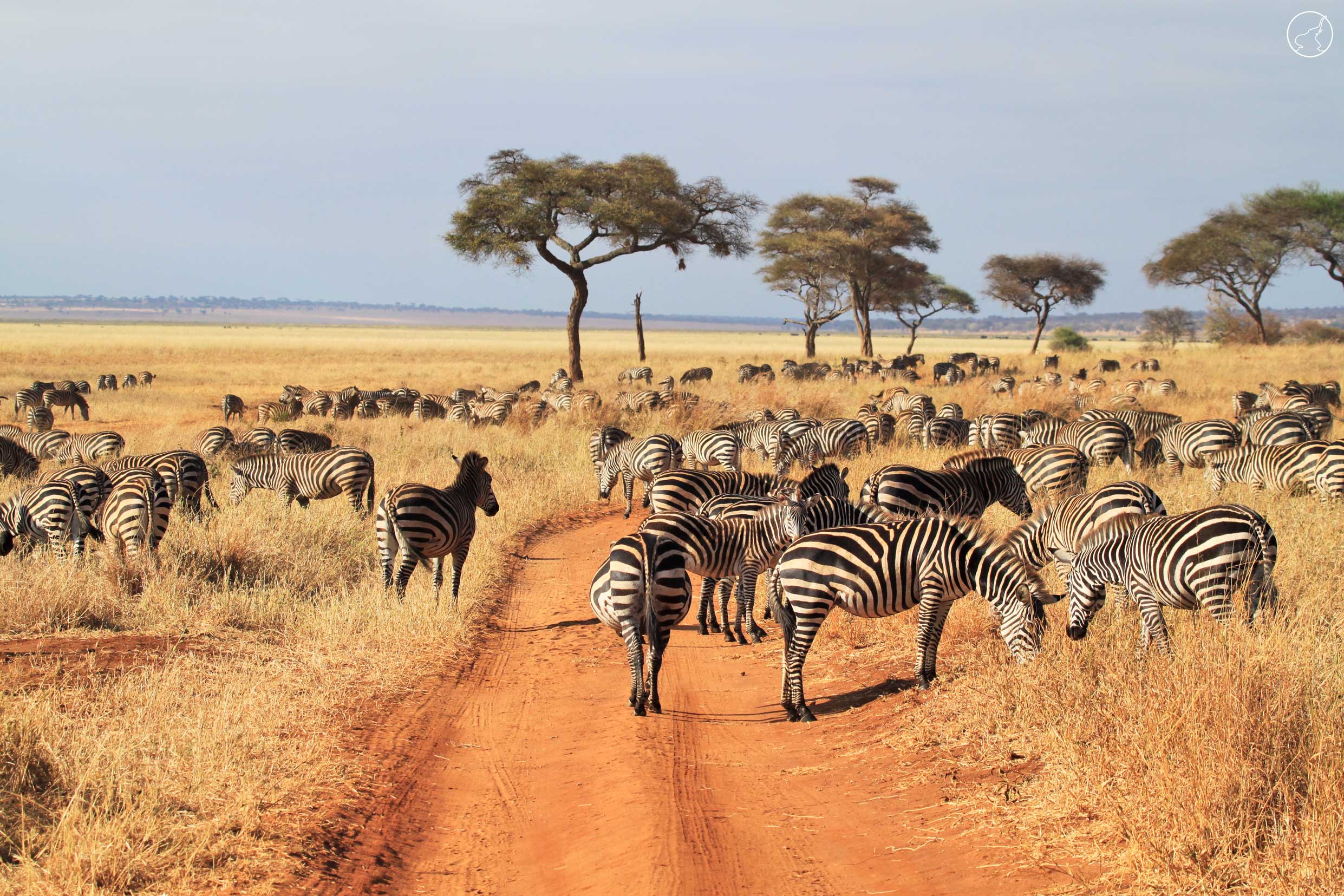
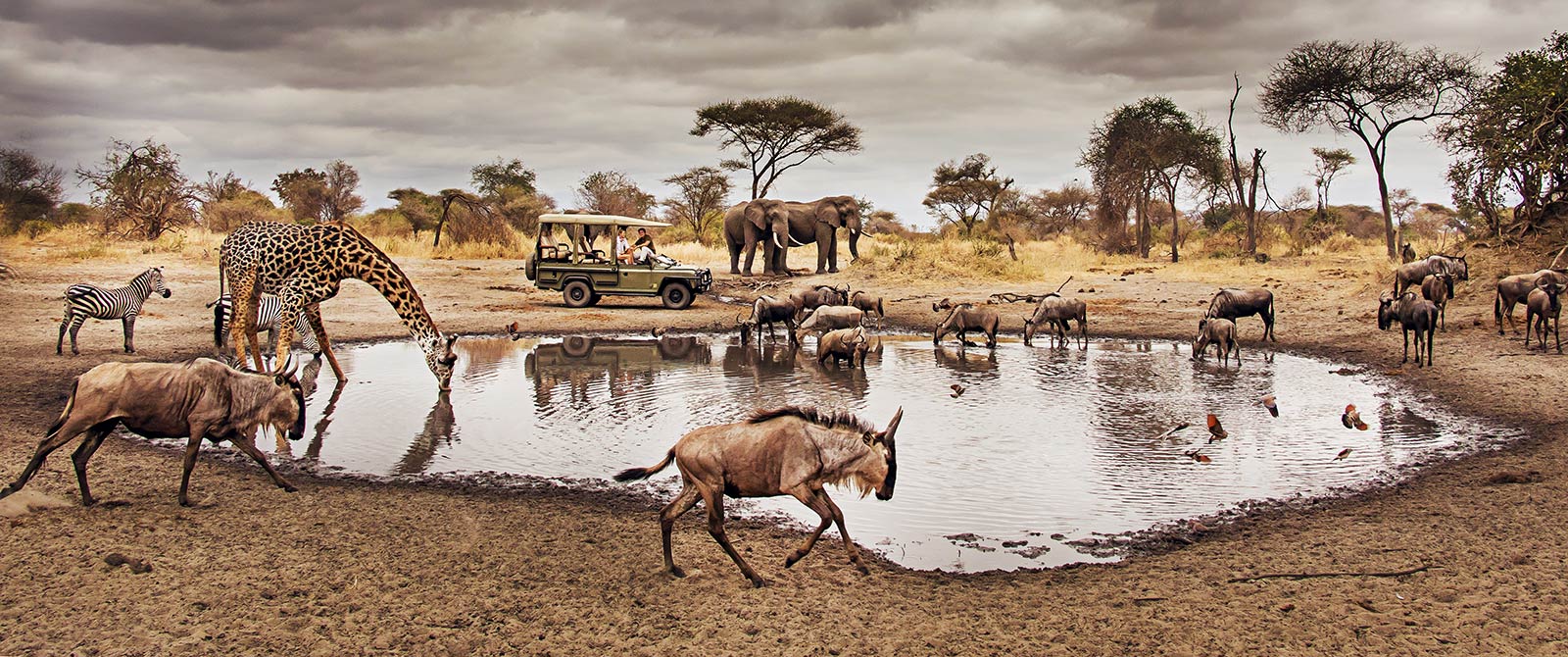
After breakfast you'll drive around two hours south to Tarangire National Park, known for its dense baobab woodland and the Tarangire River, which draws large numbers of elephant through the dry season. You'll enter the park by late morning and head straight into a game drive, watching for elephant herds working the riverbanks alongside giraffe, impala and the fork-tailed drongo species typical of this dry acacia country.
Your afternoon continues at a slower pace, tracking along the river where lion and leopard are regularly seen resting up in the shade of large fig and baobab trees. You'll check in to Tarangire Safari Lodge, perched on a ridge above the valley, in time to watch elephants moving below as the light softens toward evening.
Day03of 08
Serengeti
Tarangire to the Central Serengeti
You'll leave Tarangire after an early breakfast for the long drive north and west to the Serengeti, a journey of around five to six hours that takes you through the Great Rift Valley escarpment and past the fringes of Ngorongoro before dropping onto the open plains. Your guide will stop along the way for views and a picnic lunch, timing the drive so you enter the Serengeti's Naabi Hill gate by early afternoon.
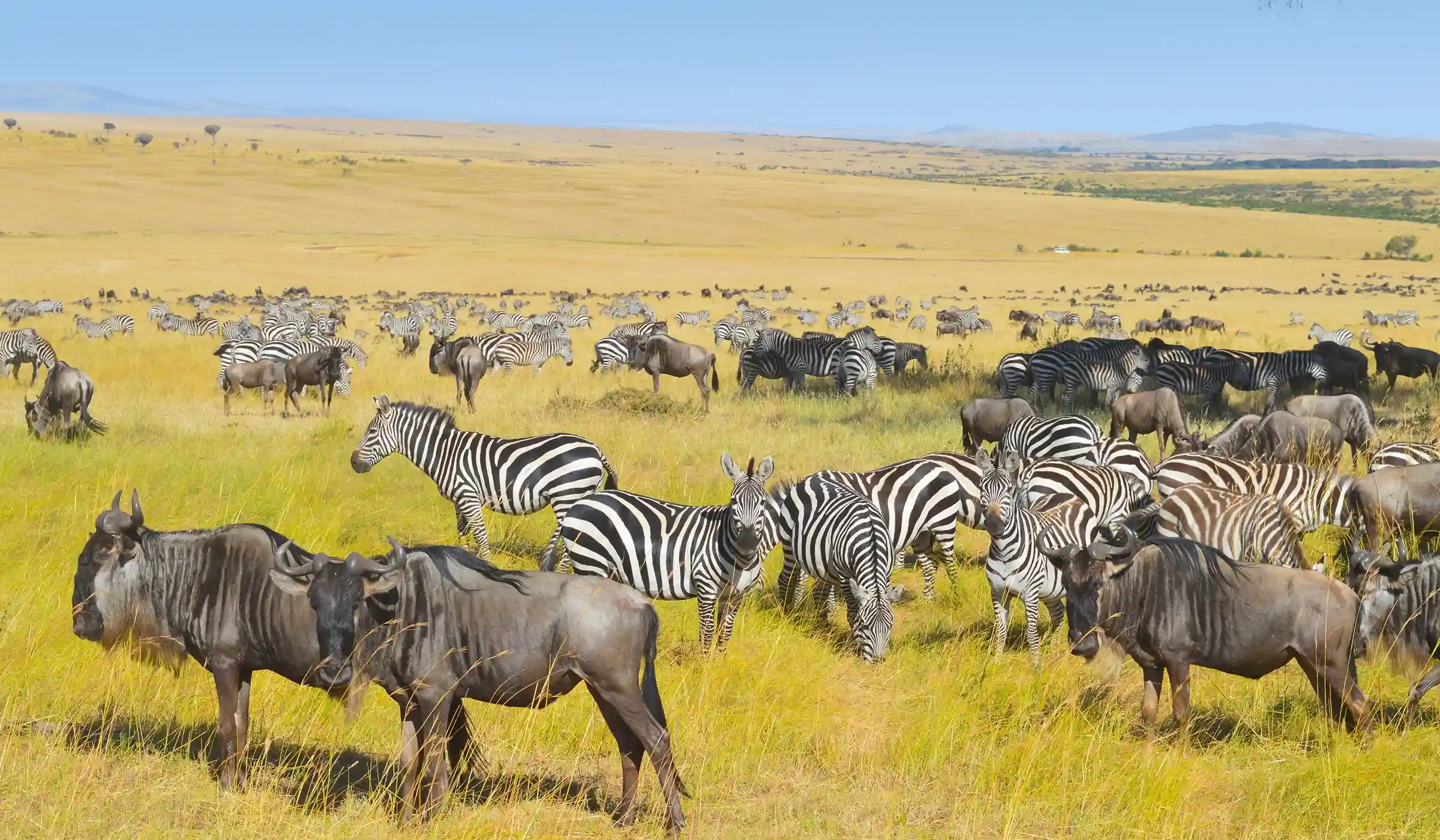
Once inside the park boundary you'll go straight into a game drive across the short-grass plains, where resident herds of wildebeest, zebra and Thomson's gazelle graze in open country and cheetah are often spotted using termite mounds as lookout points. You'll settle in for the night at Serengeti Serena, positioned to give easy access to the central plains the following morning.
Day04of 08
Serengeti
North to the Mara River
This is a full day pushing north through the Serengeti toward the Mara River area, following the migration's seasonal movement as herds funnel through the woodland and open plains of the north. Your guide will read fresh tracks and recent sightings reports to position the vehicle ahead of the herds rather than behind them, with stops for elephant, topi and the occasional lion pride resting in long grass.
By afternoon you'll be working the country closer to the river itself, watching herd behaviour at a distance for signs of an imminent crossing, such as bunching along the banks or nervous circling. You'll return to Serengeti Serena for dinner, with your guide briefing you on the plan for tomorrow depending on where the herds have settled for the night.
Day05of 08
Serengeti
The River Crossings
You'll be up before first light and out on the tracks early, heading for the Mara River crossing points where the wildebeest and zebra herds gather in their thousands between August and October. Crossings can happen at any hour, so your guide will position the vehicle at a vantage point overlooking the river and wait, watching for the herd's mood to shift from grazing to sudden, chaotic movement into the water.
Crocodiles hold in the deeper channels below the main crossing points, and the noise and dust of a crossing in progress is one of the most dramatic sights in East African wildlife viewing. You'll break for a picnic lunch near the river before continuing to watch the banks through the afternoon, returning to Serengeti Serena as the light fades.
Day06of 08
Serengeti
The Northern Serengeti
With another full day based in the north, you'll explore beyond the main crossing points into quieter stretches of the Mara River region, where kopjes rise out of the grassland and give good elevated views over the plains. Lion prides often use these rock outcrops to rest through the heat of the day, while resident hippo pods hold up in the river's calmer bends.
Your guide will vary the route from previous days, following reports of any herds still moving through the woodland corridors to the east. This gives you a broader picture of the northern Serengeti beyond the crossings themselves, including bat-eared fox, secretary bird and the open horizons that define this part of the park. You'll spend a third and final night at Serengeti Serena.
Day07of 08
Ngorongoro
The Serengeti to the Ngorongoro Crater
You'll leave the Serengeti after breakfast for the drive south to the Ngorongoro Conservation Area, a journey of around four hours that climbs steadily out of the plains and up onto the crater's forested rim at close to 2,300 metres. The change in vegetation is immediate, from dry grassland to montane forest hung with moss and lichen.
You'll check in to Ngorongoro Sopa Lodge, set on the crater's edge with views down into the caldera, in time for lunch and an afternoon at leisure. This is a good chance to rest after the early starts of the past few days, with the descent into the crater floor itself planned for the following morning.
Day08of 08
Lake Manyara
The Crater, Manyara and Arusha
You'll descend into the Ngorongoro Crater early, dropping around 600 metres to the caldera floor where dense wildlife concentrations gather around the permanent water of Lake Magadi, including good numbers of black rhino, lion and the density of grazing herds the crater is known for. Your guide will spend the morning working the floor before the ascent back up to the rim for a late breakfast.
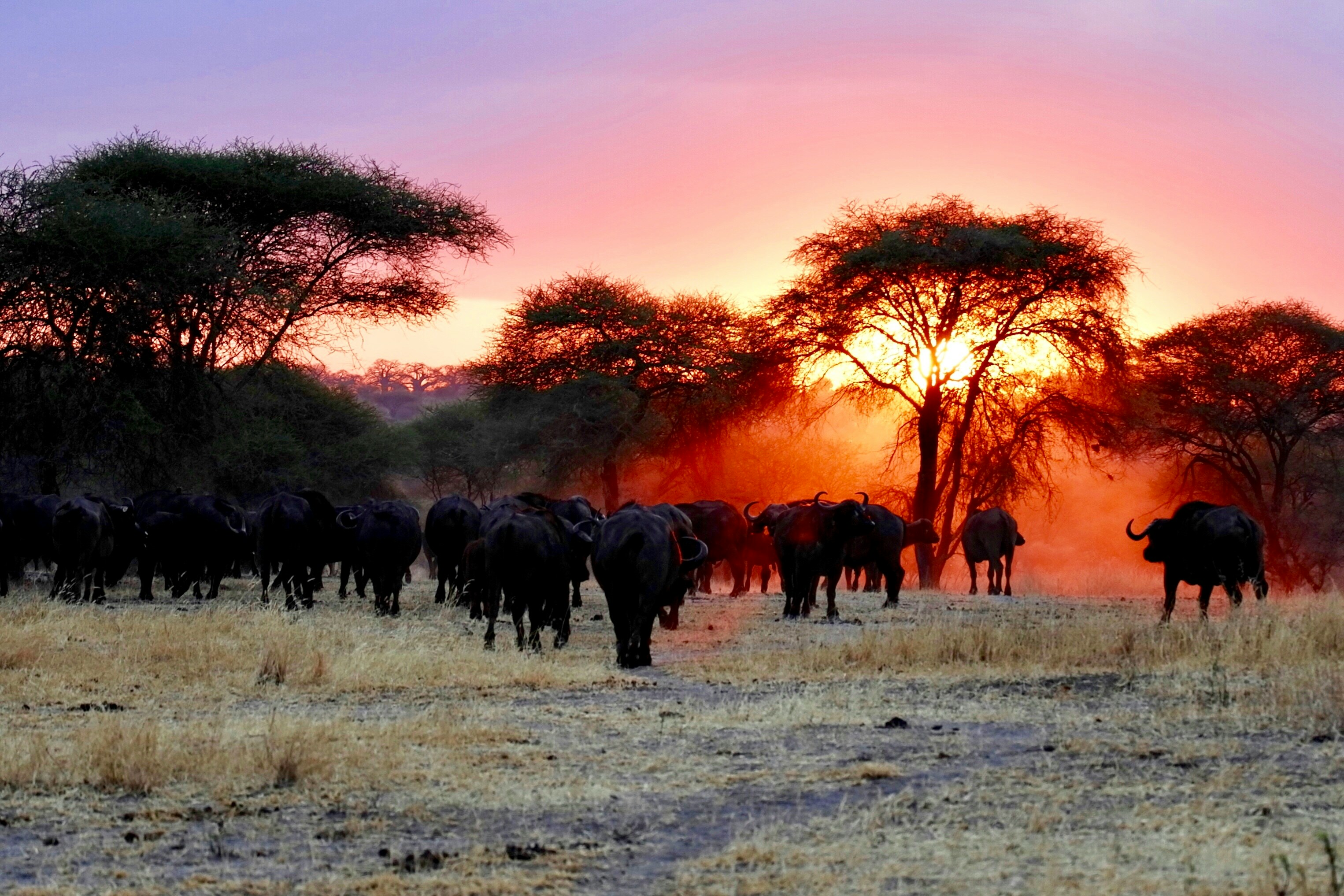
From there you'll continue to Lake Manyara National Park for a shorter afternoon game drive through groundwater forest and along the lake shore, watching for the park's tree-climbing lions and large flocks of flamingo when water levels are right. You'll finish the day with the drive back to Arusha, arriving in the evening in time for your onward flight.
Accommodation Options
Where You'll Stay
Drag or swipe to see every lodge
That's the route
Ready to make it yours?
Dates, lodge upgrades, and extra nights are all flexible this is the starting itinerary, not the only one. Tell us roughly when you'd like to travel and we'll confirm availability within a day.