A safari built around the northern Serengeti and the Mara River crossings, which fall between roughly July and October. Two nights in the north place you within reach of the…
Trip Overview
A safari built around the northern Serengeti and the Mara River crossings, which fall between roughly July and October. Two nights in the north place you within reach of the crossing points, with Tarangire and the Ngorongoro Crater completing the circuit.
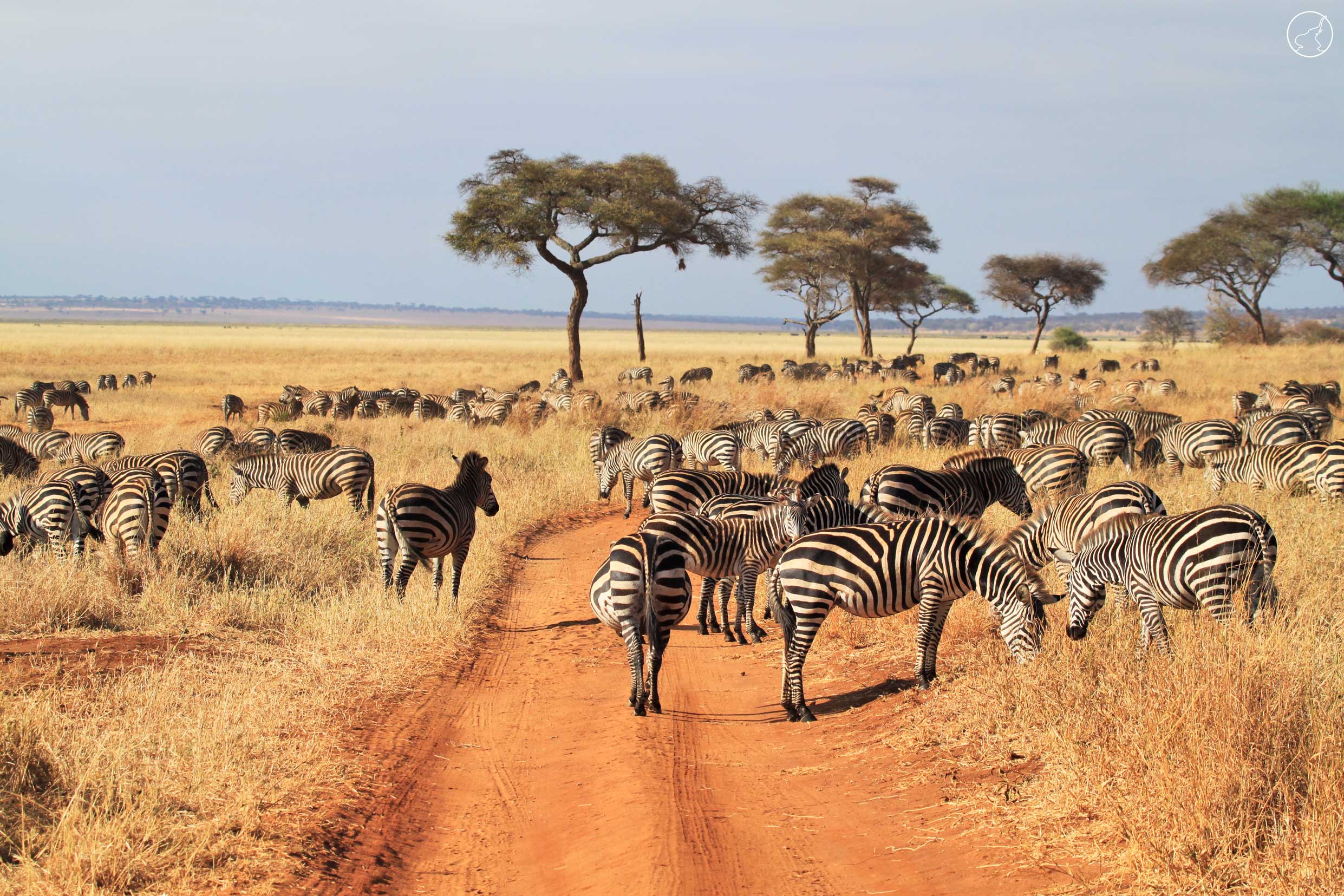
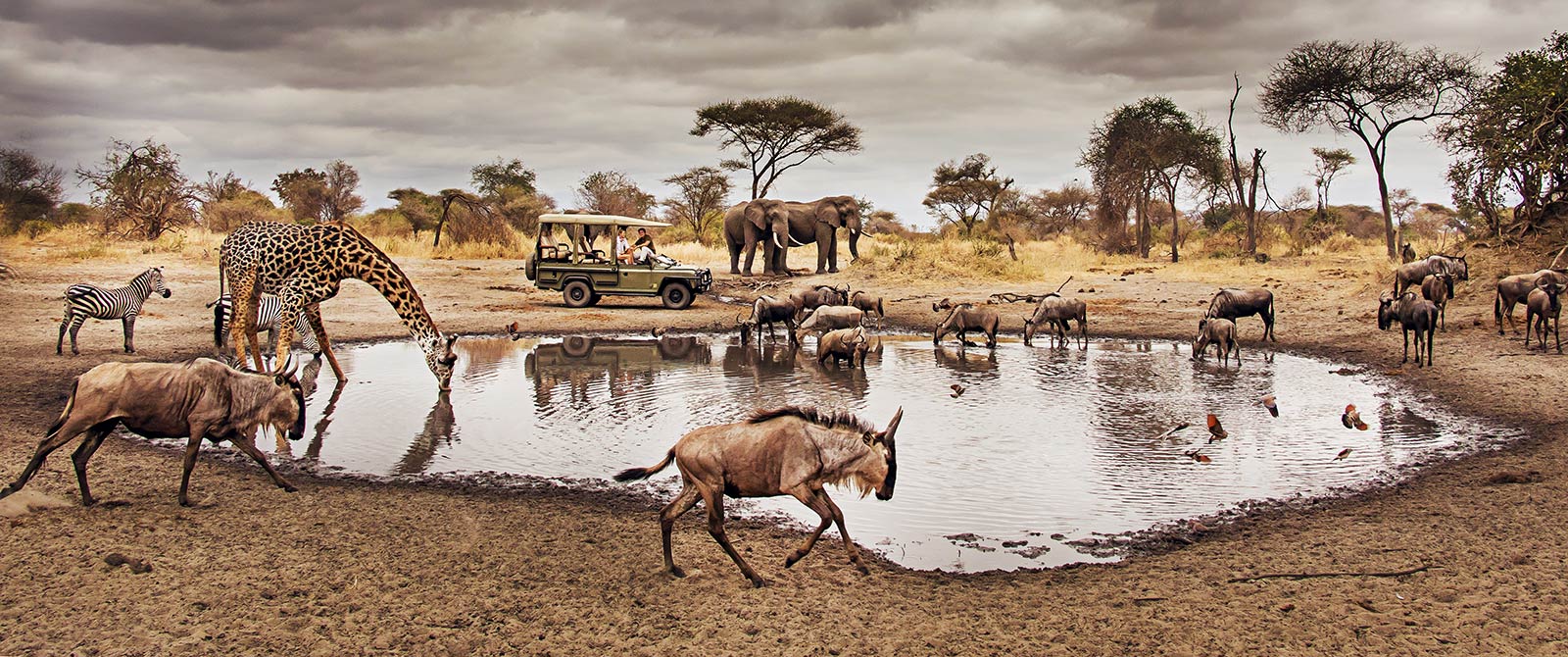
What you're likely to see
Wildlife is wild and nothing is guaranteed, but these are the species this route is built around.
The Route
The Detail
Everything below is set out plainly so there are no surprises when you receive your quotation.

Tarangire
You'll be collected from your Arusha hotel mid-morning for the drive south-west to Tarangire National Park, roughly two and a half hours on a tarmac road that gives way to red dirt as you near the park gate. After lunch at Tarangire Safari Lodge, perched above the Tarangire River, you'll head out on an afternoon game drive through country dominated by ancient baobabs and seasonal swamps.
Tarangire holds one of Tanzania's densest elephant populations, and family herds are often visible digging for water in the dry riverbed below the lodge. Your guide will also watch for lesser kudu and fringe-eared oryx, both easier to find here than almost anywhere else in the north. You'll return to the lodge as the light drops, in time for sundowners on the terrace overlooking the valley.

Serengeti
After an early breakfast you'll set out on a long drive north-west, climbing through the Ngorongoro Highlands and along the crater rim road before descending onto the open plains of the Serengeti, a journey of around five to six hours with a stop for lunch en route. The landscape shifts noticeably as you go, from Tarangire's acacia woodland to the short grass and granite kopjes of the Serengeti's central Seronera region.
You'll check into Serengeti Serena Lodge in the late afternoon and head straight out on a short game drive while the light is still good. Seronera holds resident lion prides year round, and leopards are regularly spotted resting in the sausage trees along the river valleys. Cheetah are also frequently seen scanning the open plains from termite mounds.

Serengeti
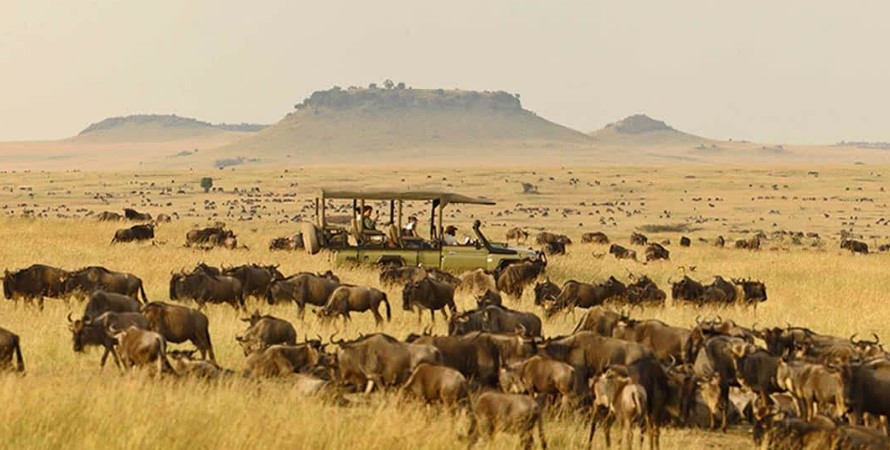
With a picnic lunch loaded into the vehicle, you'll set off early for the drive north, tracking the movement of the wildebeest herds toward the Mara River crossing points, a route of two to three hours depending on where the migration is concentrated that week. The terrain opens into rolling grassland scattered with kopjes, and your guide will be in radio contact with other vehicles and rangers tracking herd movements near Kogatende.
You'll spend the middle of the day positioned along the riverbank, watching herds build up in their thousands on the approach to the water, a tense standoff that can last hours before any animal commits. Nile crocodiles bask on the sandbanks below. You'll head back to Serengeti Serena Lodge in the late afternoon for dinner and a debrief on the day's sightings.

Serengeti
You'll head out again after an early breakfast, returning to the stretch of the Mara River where the previous day's herds gathered, since crossing points shift with rainfall and grazing pressure and rarely repeat exactly. Your guide will read the herd's behaviour, restlessness at the water's edge and jostling at the front, as signs that a crossing may be imminent.
A full day is set aside for waiting and watching, with a packed lunch taken in the vehicle so you don't lose your position. Wildebeest and zebra plunging into the current, crocodiles taking advantage of the chaos, and the sheer scale of dust and noise on the far bank are what this stretch of the trip is built around. No crossing is guaranteed on any single day, and your guide will balance patience with covering more than one likely point.

Ngorongoro
You'll leave the Serengeti early, driving back east across the plains and up onto the Ngorongoro Highlands, descending into the crater itself by mid-morning, a drop of around six hundred metres onto a caldera floor packed with wildlife in a fraction of the space you've had all week. The crater holds one of Tanzania's few remaining black rhino populations alongside dense concentrations of lion, buffalo and elephant.
You'll spend several hours on the crater floor, stopping at Lake Magadi where flamingos gather along the shallows, before a picnic lunch near the forest edge. In the early afternoon you'll climb back out of the crater and continue the drive to Arusha, arriving in the evening in time for your onward flight or overnight stay.
Accommodation Options
Drag or swipe to see every lodge
Dates, lodge upgrades, and extra nights are all flexible this is the starting itinerary, not the only one. Tell us roughly when you'd like to travel and we'll confirm availability within a day.
Gallery